This is the previous version of the Our Work page, kept for reference. The current page is here.

What we do

Our Work

Our work is grounded in a rights-based approach that upholds the principles of the UN Declaration on the Rights of Indigenous Peoples (UNDRIP), including Free, Prior and Informed Consent (FPIC). We are committed to advancing First Nations rights, self-determination, and economic empowerment through all that we do.

External engagements in the last six months — 158 in total

PBCS & TOCS
34
REP BODIES AND REGIONAL BODIES
12
INDUSTRY AND PRIVATE SECTOR
67
NATIONAL ORGANISATIONS AND ALLIANCES
45

Photo credit: Benjamin Warlngundu Ellis

Current priorities

Two pieces of work the Council is pushing hardest on right now.

Clean energy & critical minerals

The NNTC is leading efforts to support PBCs in navigating the clean energy transition, focusing on land access and benefit-sharing agreements. With funding from Boundless Earth, we are collaborating with the Mabo Centre to develop resources that draw on First Nations’ experiences in clean energy, transmission, and critical minerals development, both in Australia and globally.

Read moreShow less

One emerging model is co-ownership, where Traditional Owner groups hold equity in developer companies. This model offers potential for long-term revenue and influence over projects, but it may not suit all groups.

We are creating resources to help PBCs understand the potential risks and rewards of equity stakes in large-scale clean energy projects, including animation videos and a detailed paper.

Native Title Compensation: Understanding Your Rights

Access to Native Title Compensation

Read moreShow less

Every native title holder has a legal right to seek compensation for the loss or impairment of their native title rights. In practice, however, many Traditional Owner groups face significant barriers in accessing compensation. First Nations communities face decade-long, expensive legal battles to access compensation owed to them.

Barriers include complex and costly land analysis processes, resource-intensive evidence gathering, and limited access to legal support.

The NNTC works on behalf of its members to address these barriers and deliver fair, efficient pathways to settlement.

Our key initiatives include:

  • A National Compensation Framework – the NNTC is developing a national framework to establish clear, fair standards for compensating Native Title holders when their rights are impacted by governments or third parties. This will provide certainty for both Native Title holders and project proponents.
  • Removing barriers to accessing the courts Tenure analysis Preservation of evidence Supporting native title groups to prepare claims.
  • Sharing updates and resources – ensuring members are informed and equipped to exercise their right to compensation.
  • Facilitating a legal practitioner network – connecting lawyers to discuss strategic issues
  • Advocating nationally – representing Native Title holders in key forums and with state and federal governments.

In Griffiths v Northern Territory (Timber Creek), the High Court awarded just over $2.5 million in compensation, reinforcing that payments are due for both economic and cultural loss, including interest.

By strengthening access to native title compensation, the NNTC supports its members to secure their legal entitlements and build stronger economic futures.

For more information about our work on native title compensation, contact Clinton Benjamin, Director of Native Title, clinton.benjamin@nntc.com.au.

Rock and spinifex under a wide sky on Country

01 of 06

Strengthening native title law and rights

Future Acts

The NNTC is advocating for reforms to the future acts regime to uphold the right to Free, Prior and Informed Consent and to ensure adequate resourcing for PBCs.

The “future acts regime” is a framework in the Native Title Act outlining the procedures that need to be followed before proposed developments or activities impacting native title lands and waters can proceed. The grant of a mining lease or construction of public infrastructure are examples of “future acts”.

The future acts regime currently does not empower Traditional Owners to decide what happens on their Country and places significant strain on the limited resources of PBCs. The regime entrenches power imbalances between native title holders and project proponents by providing weak procedural rights that result in projects going ahead without consent, and suboptimal compensation and benefit sharing outcomes.

We are closely engaging with an Inquiry by the Australian Law Reform Commission (ALRC), which will develop recommendations for how the regime can be improved, including to rectify inequality or unfairness in how it operates. The NNTC’s response to the ALRC’s Issues paper can be access here. The ALRC will provide its final report to the Attorney-General by 8 December 2025.

Native Title Holders can seek compensation when their native title rights are extinguished or impaired. However, the Native Title Act provides little guidance on how compensation should be valued. To help address this, the NNTC is developing a National Compensation Strategy. This strategy promotes negotiated settlements over lengthy, costly, and often traumatic litigation processes.

The NNTC also plays a leading role in key native title compensation forums, working closely with key stakeholders, including the Commonwealth Attorney-General’s Department, NIAA, and State and Territory Governments.

Native Title Compensation

Open woodland and grassland on Country

02 of 06

Native title policy reform

PBC Funding Reform

Strong, well-resourced PBCs are vital for achieving Australia’s net-zero goals, driving economic empowerment, and closing the gap for First Nations people.

The NNTC, in collaboration with the PBC Steering Group and NIAA, is advocating for sustainable funding for PBCs, working closely with the Minister for Indigenous Australians on a proposed staged reform model aimed at increasing sector funding and establishing a long-term investment fund for its sustainability.

Escarpment country at dusk

03 of 06

Cultural Heritage

National cultural heritage law reform

The First Nations Heritage Protection Alliance (FNHPA) has a formal partnership with the Australian government on cultural heritage reforms.

The FNHPA, which is hosted by the NNTC, have been working with the Commonwealth Department of Climate Change, Energy, the Environment and Water to co-design proposals to reform the Aboriginal and Torres Strait Islander Heritage Act 1984 (Cth) to better protect the rights of Traditional Owners.

Read more

Current laws and policies in Australia are mostly unfit for the purpose of protecting and conserving First Nations Cultural Heritage. As a result, it is incumbent on businesses and investors to reach beyond legislative standards and implement leading practice for cultural heritage as defined by First Nations Peoples.

The Dhawura Ngilan Business and Investor Initiative is a First Nations-led project that provides resources to enable investors and business to pro-actively contribute to the Dhawura Ngilan Vision by achieving leading practice throughout their operations. Dhawura Ngilan means “Remembering Country" in the Ngunnawal language.

This Initiative is led by the First Nations Heritage Protection Alliance in partnership with the Responsible Investment Association Australasia and UN Global Compact Network Australia. The Initiative is working with key industry leaders to implement the Dhawura Ngilan Guides.

Read more

Dhawura Ngilan Business and Investor Initiative

Sun setting over still water at Karumba

04 of 06

Water rights and the inland waters target

Importance of First Nations Water Rights

Water is an essential for all life. For Aboriginal and Torres Strait Islander people it holds profound cultural, spiritual and physical significance. Water sustains wellbeing, connection and obligation to Country.

First Nations water rights include inherent cultural rights over waters, some of which are recognised under international and Australian law. Water rights can also be enacted through western systems of water ownership and use, like water licences.

The Current Situation

Before colonisation, Aboriginal and Torres Strait Islander peoples owned and managed all water across the continent. Now, less than 0.2% of Australia’s inland waters are legally in First Nations hands. Significant work must be done to return water to First Nations communities.

Rights under international law

The United Nations Declaration on the Rights of Indigenous Peoples(UNDRIP) is the most comprehensive international framework recognising First Nations water rights. Relevant provisions include:

Australia is a signatory to UNDRIP, yet government has not yet translated these rights into laws and policies.

Native title rights

The Native Title Act 1993 recognises Traditional Owners’ water rights based on traditional laws and custom. However, these rights are generally limited to taking and using water for cultural purposes. It has historically been difficult to establish rights for commercial and economic water use. This means opportunities to develop commercial fishing operations or native food businesses through native title rights have been limited.

Statutory water rights

State and territory laws govern water rights in Australia, meaning they vary significantly across jurisdictions. These rights typically come in the form of water licenses, shares or allocations. Licenses generally include:

These rights are not specific to Aboriginal and Torres Strait Islander people.

First Nations excluded from water access

Aboriginal and Torres Strait Islander organisations hold very few water entitlements under these statutory schemes, limiting opportunities for economic empowerment and cultural, spiritual and environmental outcomes.

Aboriginal and Torres Strait Islander people are regularly excluded from water planning, allocation and management processes, meaning large amounts of water can be allocated from waterways on their Country without their involvement.

In 2020, the Coalition of Peaks and all Australian governments signed the National Agreement on Closing the Gap, The National Agreement included targets to increase Aboriginal and Torres Strait Islander land and sea rights.

The National Agreement also committed to establishing a national inland waters target by 2021.

For the purpose of the target, inland waters are defined as:

Water that is inland from the coastal zone, is not ‘sea water’, and is located above the tidal limit and within land boundaries.

From 2020-2024, progress towards a target was slow and the commitment to introduce a target by 2021 was not met. Each state and territory had very different water regimes and ways of recording water interests, which meant it was not straightforward to develop a national baseline or national target.

In 2024, the Joint Council on Closing the Gap agreed to establish separate targets for each state and territory. These targets are due to be negotiated by the end of 2026 in partnership with state-based Peak bodies and Traditional Owner organisations.

Any increase in Aboriginal and Torres Strait Islander water entitlements should be consistent with the definition of cultural flows set out in the Echuca Declaration which states:

“Cultural Flows” are water entitlements that are legally and beneficially owned by the Indigenous Nations of a sufficient and adequate quantity and quality to improve the spiritual, cultural, environmental, social and economic conditions of those Indigenous Nations. This is our inherent right.

This means a water reserve which is not “legally and beneficially owned” by a Traditional Owner group will not meet the definition. Nor will a licence purely for cultural or economic purposes rather than the full set of conditions set out in the Echuca Declaration.

The NNTC’s primary role in the inland waters target negotiations is as co-chair of the Inland Waters Target Working Group.

This working group oversees how each state and territory government is working with Aboriginal and Torres Strait Islander Peaks and Traditional Owner organisations in their jurisdiction to negotiate a target and enabling reforms. The NNTC also supports members to participate in negotiations through access to resources, expertise and information.

Beyond the inland waters target, the NNTC advocates more broadly recognition and enforcement of Traditional Owners’ rights over both their lands and their waters.

Legal Recognition of Water Rights

  • Article 25: Right of Indigenous people to maintain spiritual relationship with water
  • Article 27: Right to govern waters according to Indigenous laws and customs
  • Article 32: Right of Indigneous peoples to decide what activities happen on territories, including water-related activities.
  • Conditions on usage amounts
  • Requirements for agreed commercial purposes.

National Agreement on Closing the Gap

Progress and challenges

Cultural flows

The NNTC’s Role

Resources & Links

Sea breaking over rocks on Sea Country

05 of 06

Economic Empowerment

Offshore energy

The history of resource development in this country, both minerals and energy, has been a history of dispossession of Traditional Owners and theft of their resources. As this country transitions towards a renewable energy economy, it is vital that a history of dispossession of Traditional Owners and theft of their resources is not repeated in the offshore environment.

Several recent decisions in the Federal Court have highlighted deficiencies in the way Traditional Owners’ interests in Commonwealth offshore areas have been considered in the context of offshore energy projects. Ensuring protection of Traditional Owner social and economic rights and cultural heritage, as well as ensuring that Traditional Owner communities enjoy economic and social benefits deriving from offshore activities, is essential

Clean energy & critical minerals is a current priority — read about it above.

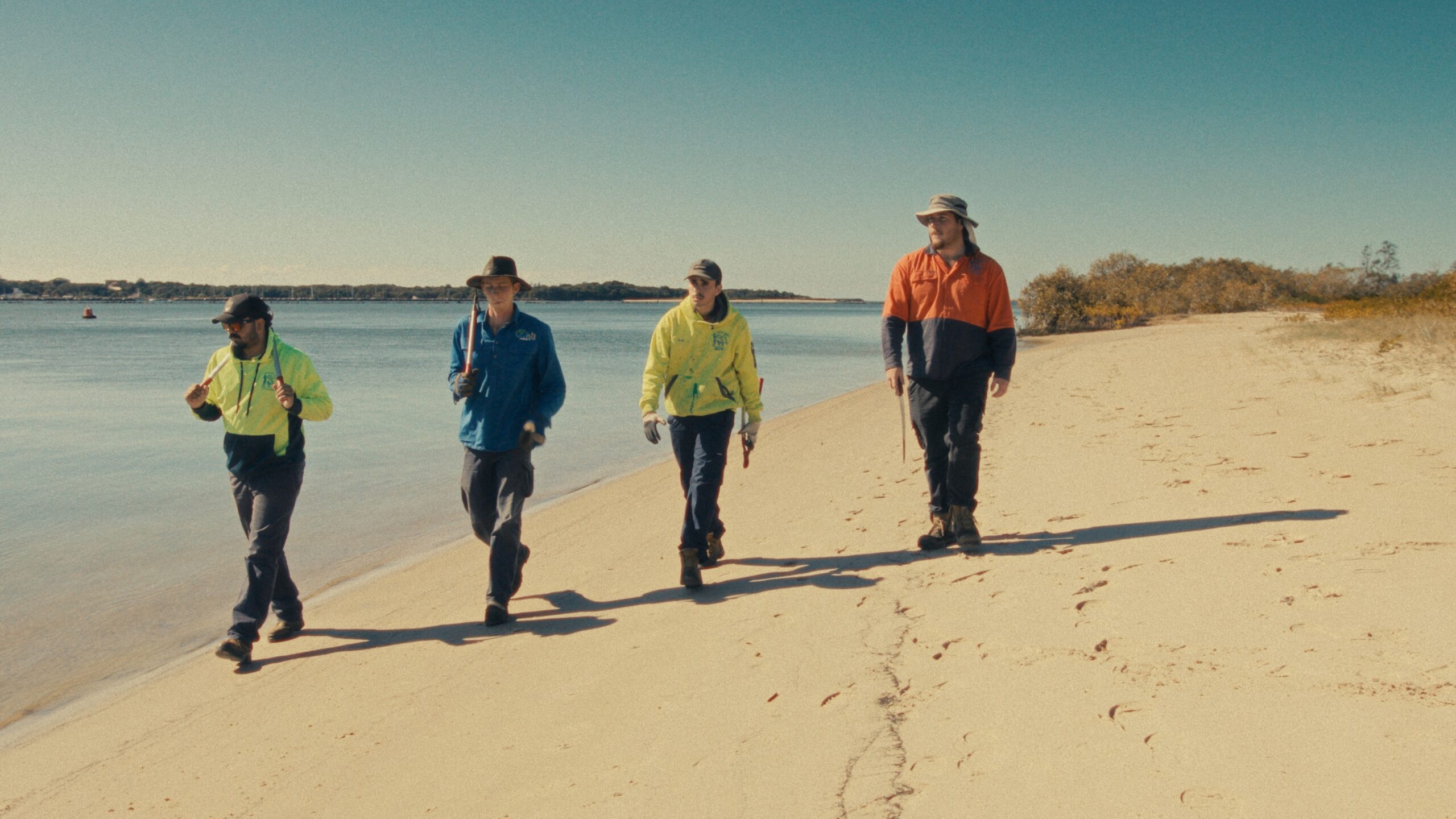
Members of the Wadyarr Gargle team walking together along a beach

06 of 06

Supporting our members

Regional forums

The NNTC hosts six PBC Regional Forums annually, funded by the NIAA. Co-presented by NTRB/SPs the forums bring together Directors from PBCs across that region to hear about the support available from government, to share experiences, and discuss challenges faced by PBCs.

We encourage PBCs to invite youth delegates to foster mentoring and the development of future leaders. To find out more about upcoming forums in your region, contact carolyn.betts@nntc.com.au.

We host a range of events for members and the native title sector. From national conferences to regional training to workshops with local PBC boards.

All of our events provide clear, relevant information in a culturally safe space run by experienced NNTC staff and First Nations facilitators on hand to ensure best possible experience for our delegates.

To find out more visit our events page.

Training and events